
2025
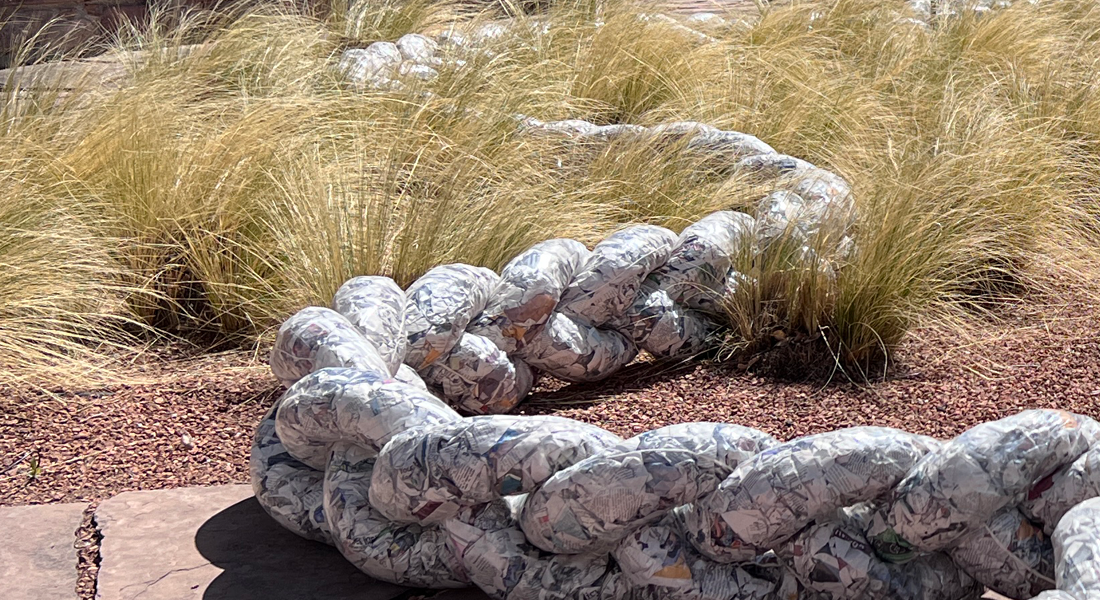
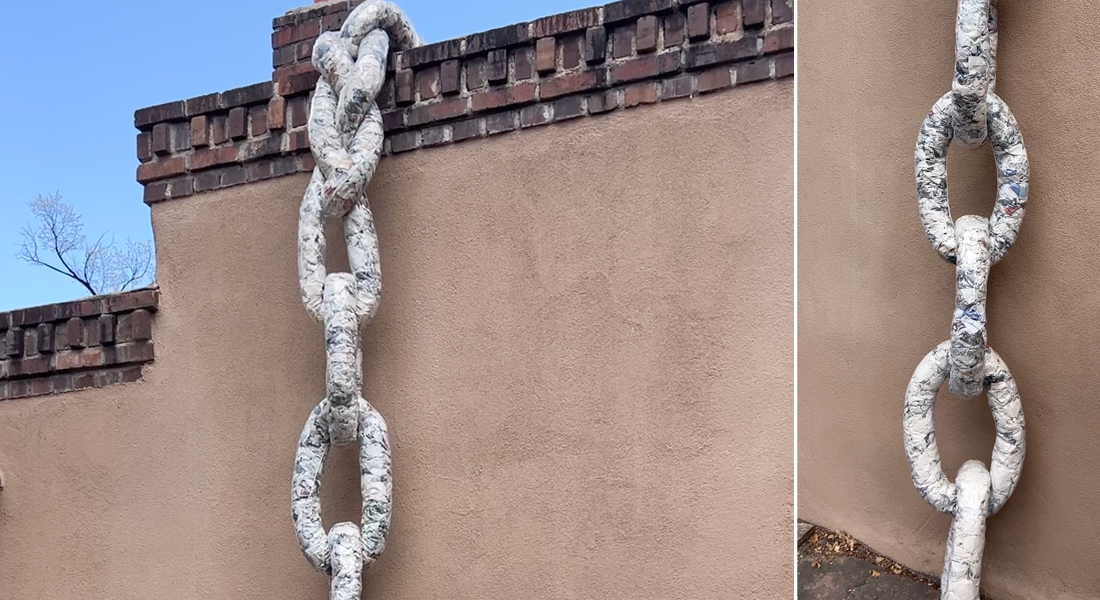
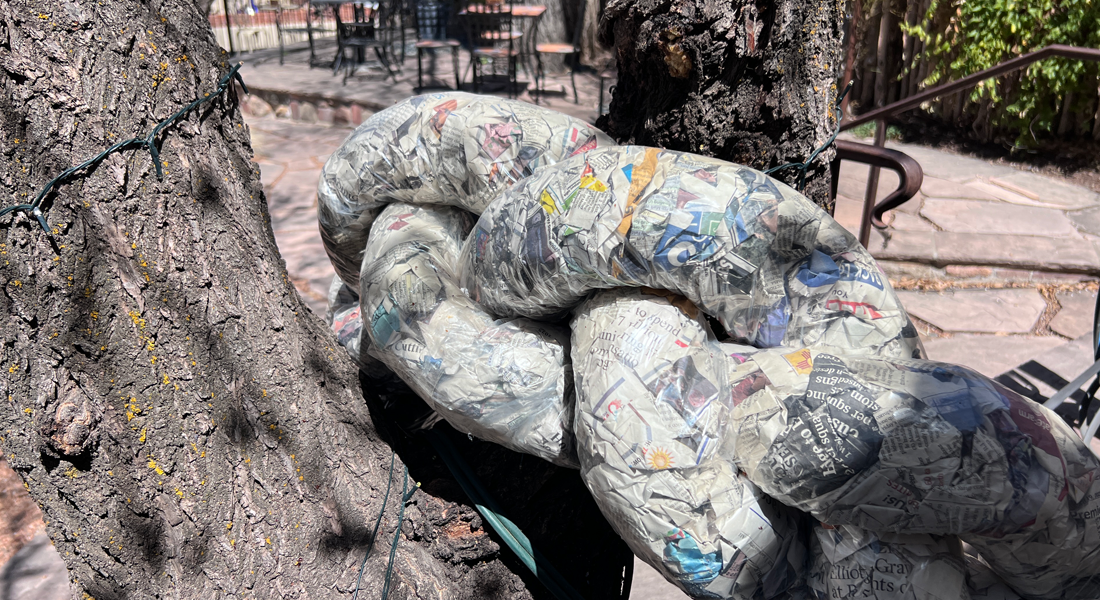
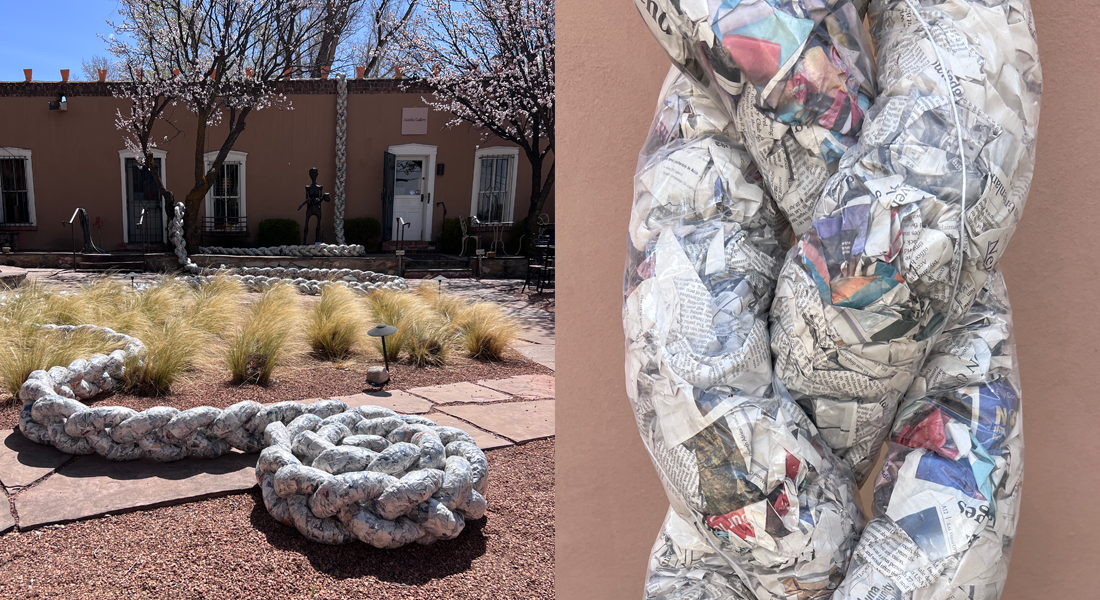
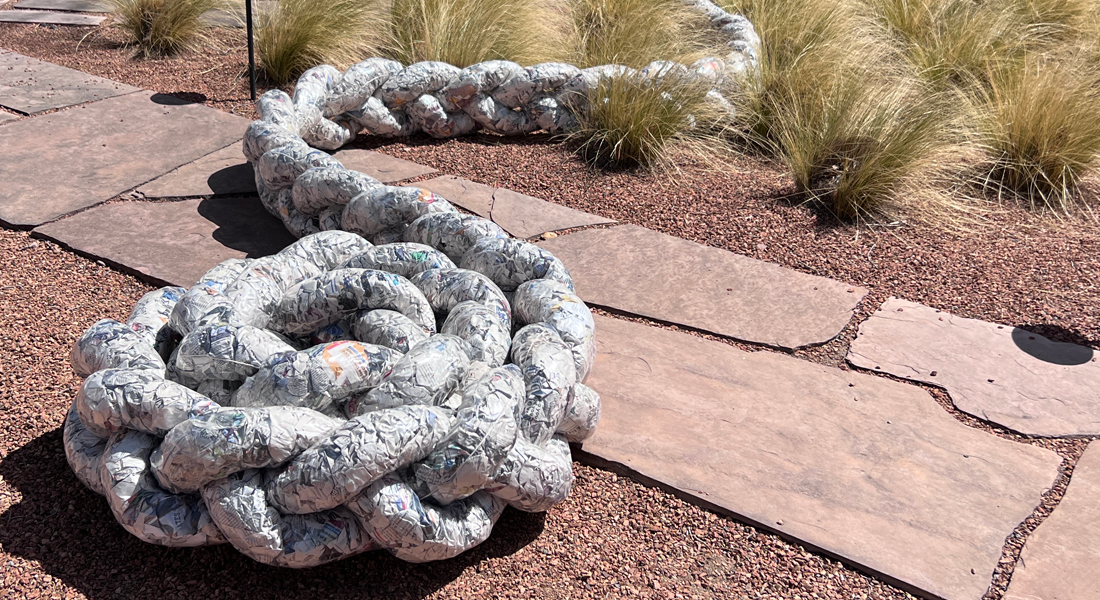
Newspaper, string, plastic
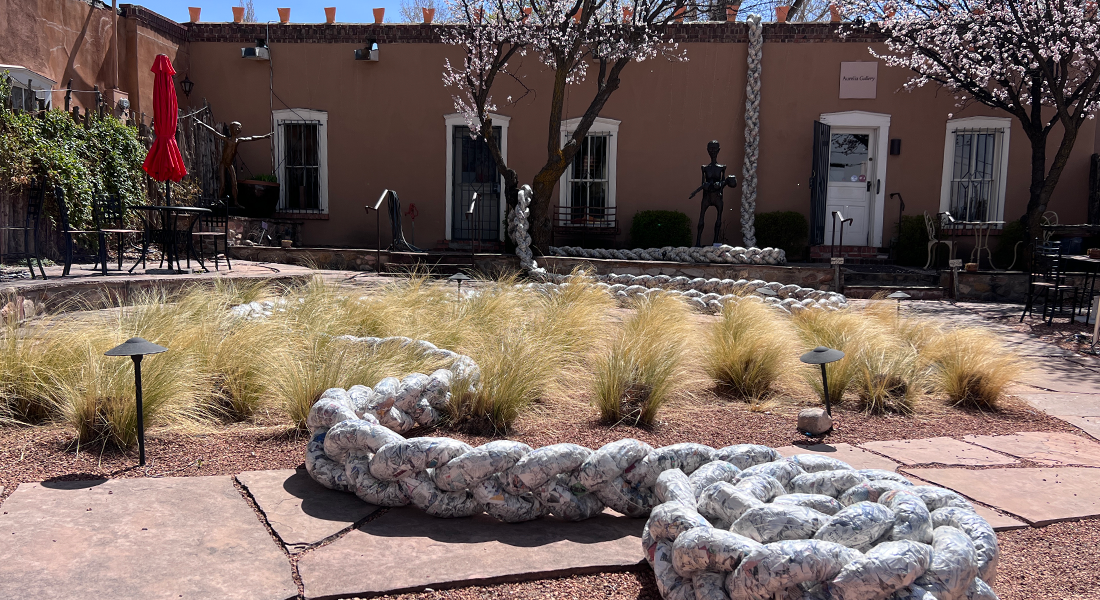
karrie hovey : morphology, Aurelia Gallery, Santa Fe, NM 2025
Special Thanks to the Santa Fe New Mexican for providing expired, uncirculated newspapers to create the work.
The Tell-Tale installation at Aurelia Gallery in Santa Fe is even more relevant today than it was when the first Tell-Tale was created in 2008 for the Fiber Matters exhibition at the Ice House in Phoenix, AZ.
At its core, the Tell-Tale work is about the crucial role the free press fulfills in protecting our democracy and uniting our communities. Given the rapid consolidation of news outlets, the shuttering of many local newspapers around the country, and the move to distribute news online and over our phones, it is even more critical that newspapers continue to be printed. There is something very tangible, very real, and accountable about the printed word that seems less concrete and substantial when written on a platform that can be edited, manipulated, sensationalized, co-opted, recontectualized, or deleted instantly. There is also something special in consuming the daily news presented and emphasized by the editorial staff through their decisions of density, placement prominence, sequencing, rhythm of the text and articles, the distribution of images, etc. that inspires critical thinking and contemplation. The nuance of these decisions tells a story that is lost by clicking on a link and scrolling rather than turning the pages and smelling the ink on paper.
I mentioned the importance of newspapers in a community. A newspaper not only unites a community, it has the ability to create communities through directing shared conversations, presenting shared concerns, inviting the public to participate whether that be in a dialog, at a cultural or sporting event, or a shared celebration. Newspapers highlight people and businesses in the community that inspire ideas and provide services to others. Newspapers record what will become our collective history. Once regional papers are lost a critical link that joins a community is lost. And I do truly believe that much of the polarization that is present today is because we no longer have a shared understanding of the commonalities that unite us which has allowed us to be defined by the differences that divide us.